Scale your business with AI-driven web design, custom software development, targeted SEO, and performance digital marketing from DigiCraftsAI. Get a free audit today!
Loading
Scale your business with AI-driven web design, custom software development, targeted SEO, and performance digital marketing from DigiCraftsAI. Get a free audit today!



Aug 10, 2026 · Digi Crafts AI
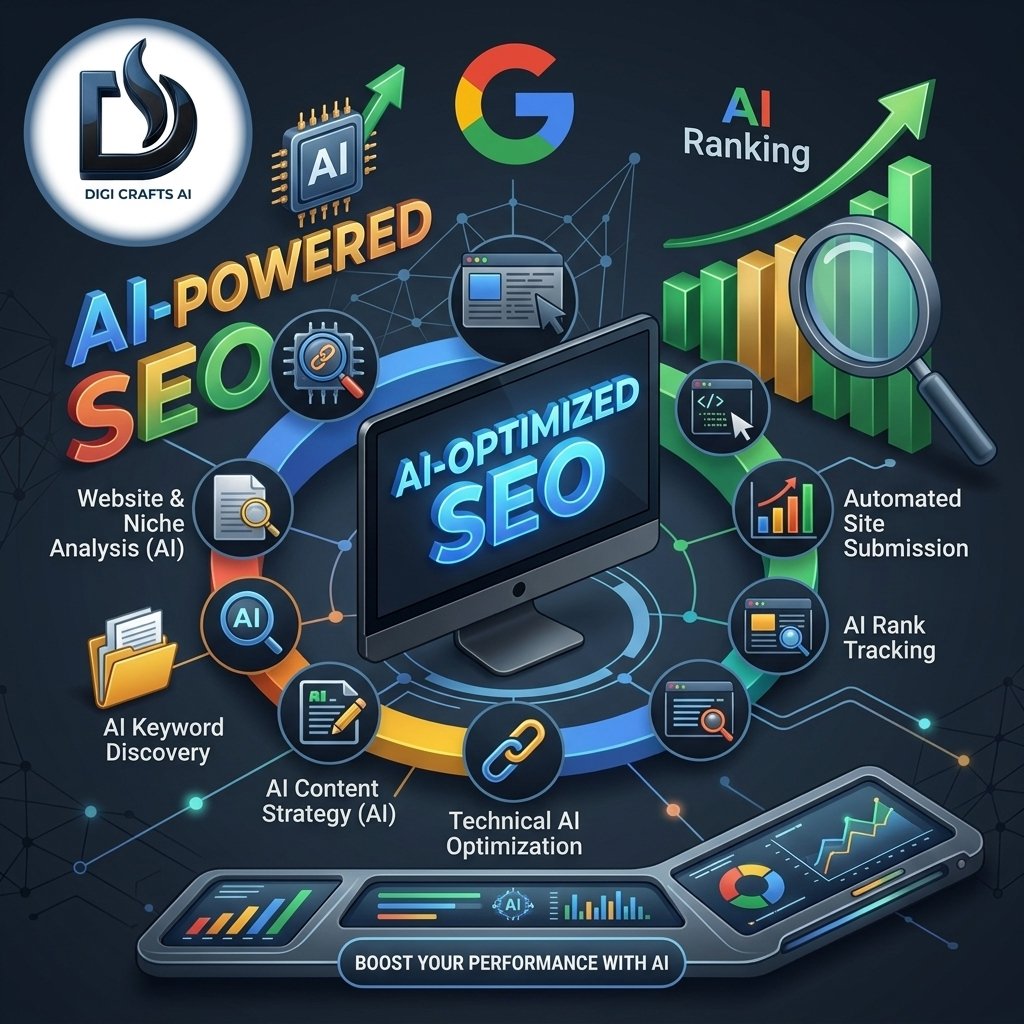
Search engines are evolving faster than ever. What worked a few years ago—keyword stuffing, simple backlink farming, and low-value content—no longer guarantees top rankings. Today, search algorithms leverage advanced artificial intelligence to understand user intent, semantic context, and overall content quality.
At DigiCrafts AI, we believe that combining human creative strategy with intelligent AI tools is the key to dominating search engine results pages (SERPs).
Whether you are looking to scale organic traffic, optimize existing content, or build a resilient digital presence, this guide breaks down the core pillars of modern Search Engine Optimization (SEO).
To build a sustainable digital marketing strategy, your business needs to excel across four fundamental areas of SEO:
On-page SEO focuses on elements on your site that you can directly control. Today, search engines prioritize E-E-A-T (Experience, Expertise, Authoritativeness, and Trustworthiness).
Search Intent Matching: Ensure your content answers the exact query type—whether informational, navigational, transactional, or commercial.
Semantic Keyword Integration: Instead of repeating exact-match keywords, incorporate contextual synonyms and natural language entities that AI search engines recognize.
Header Hierarchy: Structure articles with logical H1, H2, and H3 tags to help crawlers and users scan content effortlessly.
Meta Descriptions & Title Tags: Craft compelling titles under 60 characters and meta descriptions under 155 characters that drive high click-through rates (CTR).
A great strategy fails if search engines can't crawl or index your web pages properly. Technical SEO ensures your website delivers a seamless underlying infrastructure.
Core Web Vitals: Optimize load times, visual stability, and interactive responsiveness to meet Google's user experience standards.
Mobile-First Indexing: Ensure layout responsiveness across smartphones, tablets, and desktops.
Structured Data (Schema Markup): Use schema code to help search engines understand rich snippets, FAQs, product details, and business information.
XML Sitemap & Robots.txt: Guide search engine bots directly to your most important pages while preventing crawl budget waste on unnecessary paths.
Off-page SEO demonstrates to search engines that your brand is a trusted authority across the broader web.
High-Quality Backlinks: Earn links from reputable, industry-relevant domains through authoritative guest publishing, data reports, and outreach.
Digital PR: Build brand mentions across news media, industry publications, and digital communities.
Local SEO Optimization: Maintain an updated Google Business Profile, gather real customer reviews, and ensure NAP (Name, Address, Phone) consistency.
As AI search overviews and conversational assistants become mainstream, traditional SEO must adapt to Generative Engine Optimization (GEO).
Direct Answer Optimization: Format concise 40-60 word summaries near the top of key sections to feed AI summaries.
Data-Rich Tables & Lists: Structure key comparisons, steps, and statistics clearly so AI crawlers can digest and cite your content.
Unique Insights & First-Party Data: Generative AI tools favor sources that provide original research, proprietary studies, or expert commentary over generic summaries.
If you're ready to improve your website’s organic performance today, follow this step-by-step optimization workflow:
Perform an SEO Audit: Use tools like Google Search Console, Ahrefs, or Semrush to identify technical errors, broken links, and underperforming pages.
Conduct Intent-Driven Keyword Research: Identify low-competition, high-intent keywords that align with your core products or services.
Upgrade Top-Performing Content: Refresh outdated posts with new statistics, improved headings, updated multimedia, and clearer calls to action.
Optimize Visuals & Assets: Compress images, add descriptive alt text, and use WebP file formats to boost page load speed.
Monitor & Refine: Track impressions, CTR, average positions, and organic conversions on a weekly basis to adjust your strategy.
Managing every layer of modern SEO requires time, deep technical knowledge, and continuous adaptation. At DigiCrafts AI, we combine cutting-edge AI tools with tailored digital strategies to help your business gain authority, outrank competitors, and drive predictable organic growth.
Ready to unlock your website's full organic potential? Visit DigiCrafts AI today to learn more about our custom AI-driven marketing and SEO solutions!